
Analysis Results:
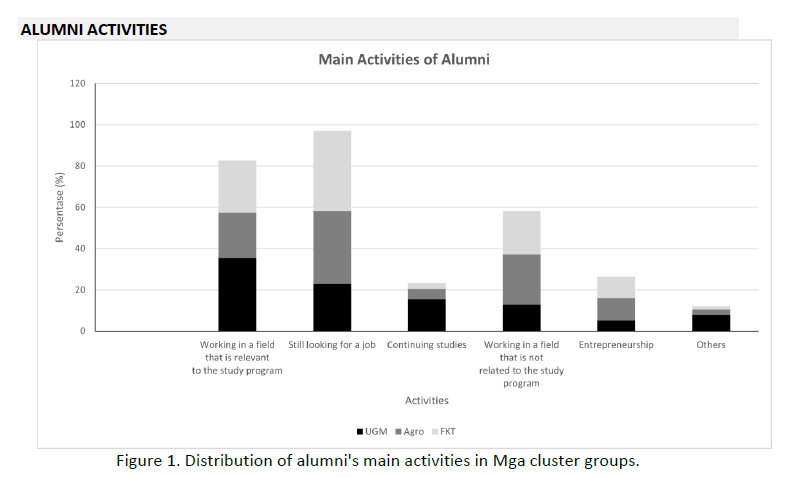
Based on the graph of alumni activities, the majority of graduates from the three groups (UGM, Agro, and FKT) are employed in fields relevant to their study programs, with UGM showing the highest proportion in this category. Nevertheless, a considerable number of alumni remain unemployed or are seeking jobs, particularly from the Agro and FKT groups. Only a small proportion of alumni pursue further studies, with UGM and Agro slightly higher than FKT. Some alumni are employed outside their field of study, a category dominated by FKT graduates. Entrepreneurial paths remain relatively uncommon but are still observable, especially among FKT alumni. Other activities are minimal and mainly represented by UGM alumni.
Analysis Results:
The graph indicates that the longest average waiting time occurred at the Agro level, at approximately 2.6 months. UGM as a whole recorded an average waiting time of about 2.3 months, while FKT showed the shortest waiting time, at around 2 months. These findings suggest that the process at the Agro level tends to take longer compared to both the university and FKT levels.
Analysis Results:
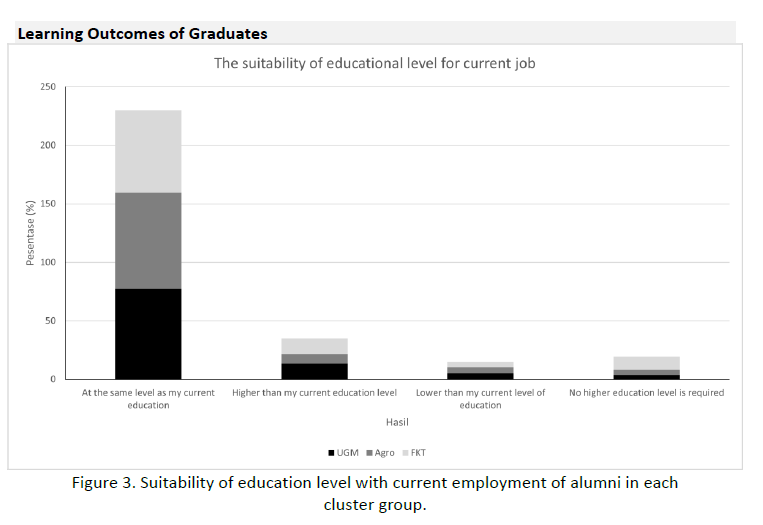
The graph shows that most graduates from UGM, Agro, and FKT are employed in positions aligned with their educational level, reflecting a strong match between qualifications and job types. Only a small proportion work in roles above or below their level of education, suggesting effective absorption into appropriate job categories. Nonetheless, a few graduates—particularly from FKT—are employed in positions not requiring higher education, likely due to the nature of field or practical work. Overall, the findings indicate that the education provided is largely relevant and aligned with labor market needs.
Analysis Results:
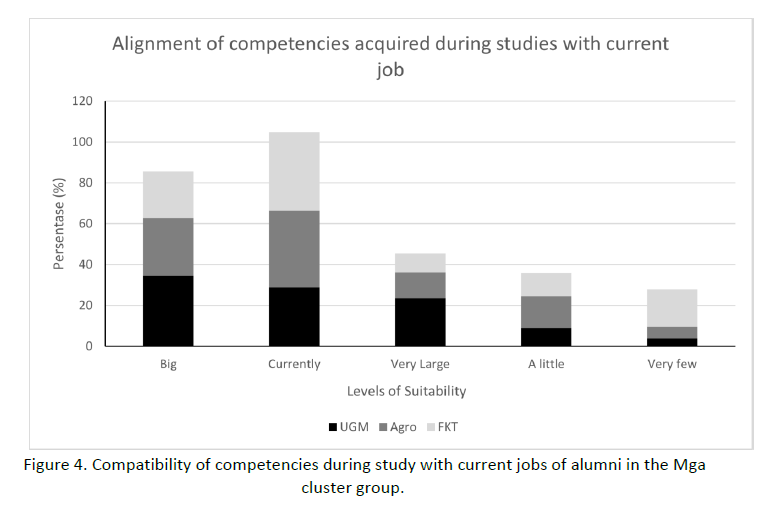
The graph indicates that most respondents rated the relevance of their study-acquired competencies to their current jobs as moderate to high, with “moderate” being the most prevalent, particularly among Agro and FKT graduates. UGM graduates showed a notable proportion at the “very high” level. Meanwhile, only a small share perceived their competencies as “slightly” or “very slightly” relevant, although FKT contributed relatively more to the latter category. Overall, the findings suggest that graduates generally consider their competencies relevant to their current jobs, yet improvements remain necessary to better align the curriculum with labor market demands.
Analysis Results:
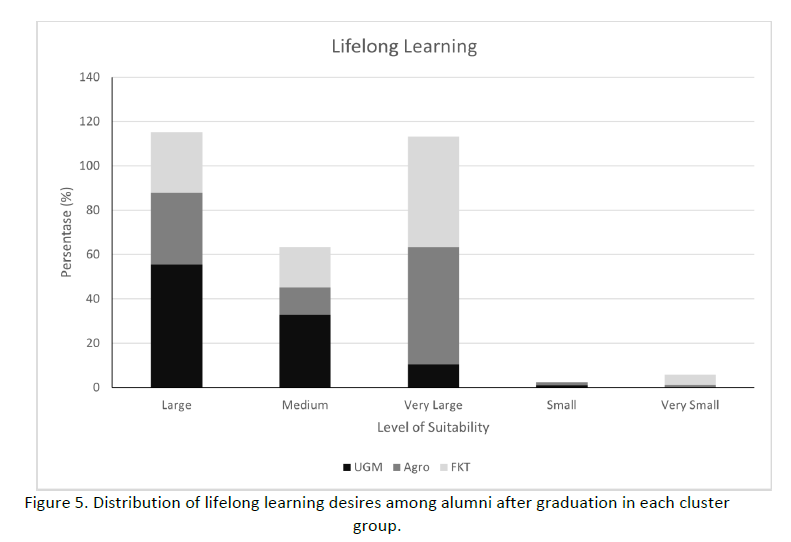
The graph shows that most respondents expressed a strong desire for lifelong learning, with the “high” and “very high” categories dominating. UGM graduates were most represented in the “high” category, while Agro and FKT graduates had the largest share in the “very high” category. Only a small proportion selected the “low” or “very low” options, suggesting a consistently strong motivation for continued learning across all groups. Overall, the findings highlight a robust learning culture among graduates and significant potential for further competency development.
Analysis Results:
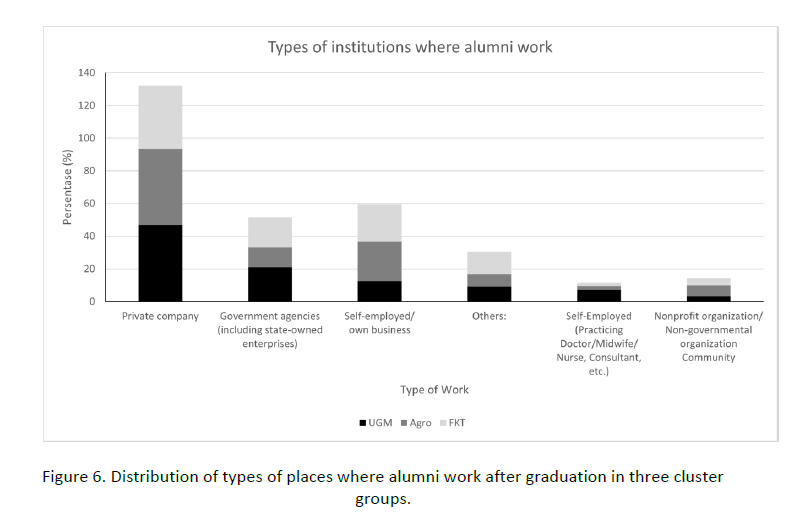
The data indicate that most alumni are employed in private companies, with FKT showing the highest proportion, followed by Agro and UGM. Government institutions, including state-owned enterprises (BUMN), account for a smaller share, though FKT and Agro still dominate this category. Entrepreneurship is also a notable career path, particularly among Agro and FKT graduates. In contrast, the proportion of alumni working in nonprofit organizations or other sectors is relatively small and evenly distributed. Overall, the trend suggests a stronger orientation of alumni toward private sector employment and entrepreneurship compared to government or nonprofit work.
Analysis Results:
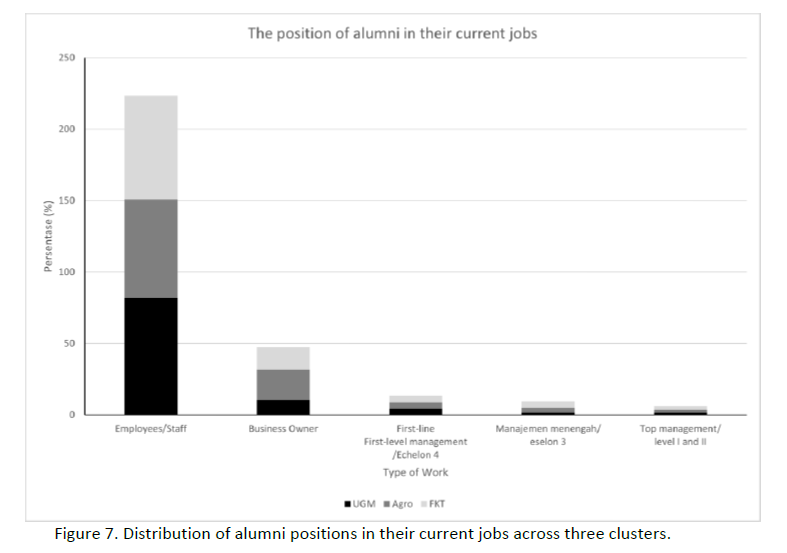
The data show that the majority of alumni are employed as staff, with FKT contributing the largest proportion, followed by Agro and UGM. This suggests a trend toward careers in large organizations, particularly in the private sector and educational institutions. Entrepreneurship, especially in the agricultural field, is also significant among Agro and FKT graduates. By contrast, alumni in first-line, middle, and top management positions represent a smaller proportion, distributed relatively evenly across the three groups. This indicates that most alumni are still in the early stages of their careers, while managerial roles remain limited. Overall, alumni predominantly pursue careers in the corporate sector or entrepreneurship, with a strong concentration in private companies and agriculture.
Analysis Results:
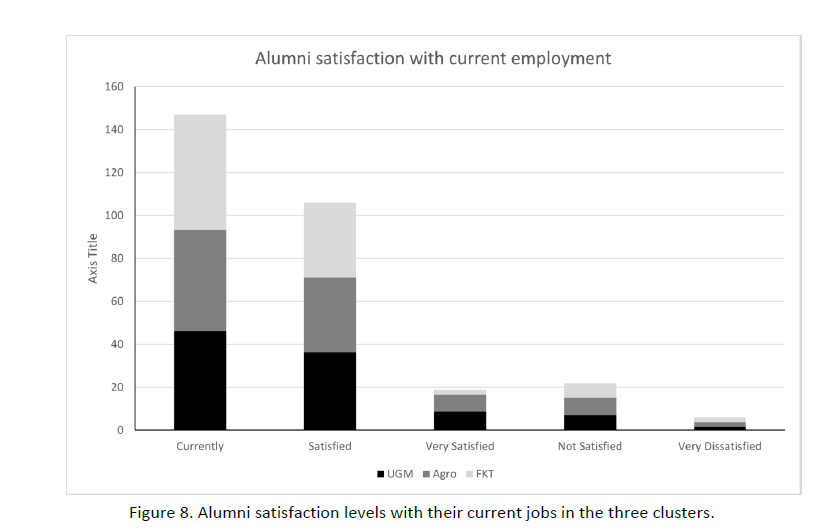
The graph indicates that alumni job satisfaction is predominantly in the “satisfied” and “moderate” categories, with “moderate” being the most common, particularly among FKT graduates, followed by Agro and UGM. The proportions of “very satisfied” and “dissatisfied” are relatively small, with most responses coming from FKT and Agro. The “very dissatisfied” category is minimal, showing that the majority of alumni are generally satisfied with their current jobs. Overall, the findings suggest that alumni tend to view their employment positively, with most reporting moderate to high satisfaction.
Analysis Results:
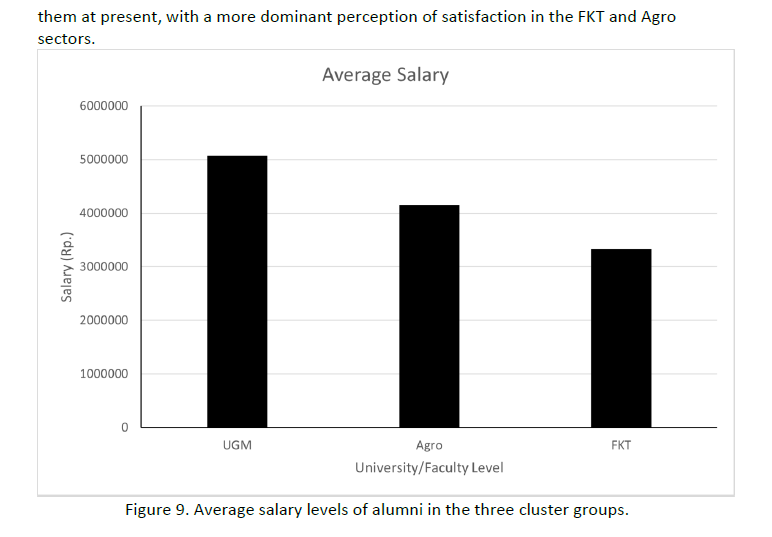
The graph shows that UGM alumni earn the highest average salaries compared to Agro and FKT. UGM graduates receive approximately IDR 5,000,000, followed by Agro graduates at around IDR 4,200,000, and FKT graduates at about IDR 3,300,000. This indicates that UGM graduates have greater opportunities for higher income, which may be attributed to differences in expertise, competency levels, and access to better employment opportunities. Overall, the data suggests that certain institutions, particularly UGM, are able to provide graduates with more competitive salary outcomes.